No. 48 • 2023-12-22

Apple Vision Pro

This is an old newsletter that I didn’t post to the blog… just catching up.

Virtual live performance

I’ve consistently written that new technology for the performing arts needs to enable something more, or better than previously possible. There have been many experiments with virtual and/or augmented reality (VR and AR) art, but they’ve remained on the far fringes for artists and audiences. I think that’s about to change when Apple releases its Vision Pro headset in “early 2024”. The quality of the experience is now close enough to “being there” to provide a reasonable proxy to a live performance. While I haven’t used it myself, accounts from people I trust who’ve tried it are that it is very close to looking at reality. Of course, that experience comes at a hefty price ($3500!) and very little existing content or applications. And of course, relatively few people have any experience or familiarity with VR.

There are a number of virtual, immersive experiences available on existing headsets (Meta Quest and HTC Vive being the most “popular”). The most common are VR games and 3D movies (think Avatar). Some live sports content is also available, similar to being courtside at an NBA game. So this raises an obvious question… What about live concerts, theater, dance, and opera?

Here are some of my predictions, keeping in mind that my predictive track record is pretty poor. 

  • Pop concert experiences will be among the first to try VR: Think of all of the people who couldn’t get Taylor Swift tickets. How much would they pay for a live virtual experience? You get a comfortable seat and don’t have to deal with parking, traffic, and overpriced snacks. The most popular performers will have the resources to provide premium experiences (views from different audience seats, perhaps flying cameras over the stage). It may feel more like a sporting event than a concert.
  • Performing arts: I think this is where it gets really interesting. The demographics of the current theater, symphony, opera, and ballet audience (older and wealthy) are exactly the ones who can afford the hefty price of Vision Pro. And as we get older, going out for a night at the orchestra (to sit for hours in an uncomfortable chair) becomes less appealing, but sitting at home to watch a live performance happening downtown (or elsewhere) that’s almost the same as being there might be compelling enough.

Here’s my initial advice to arts and culture organizations: start experimenting with immersive content. There are so many questions that no one yet has the answers to.

  • How do we best capture a live performance? What kinds of technology (VR cameras) are needed, and what kinds of production facilities need to be upgraded? This is quite different from traditional video production, but it could in fact be easier. You don’t need multiple cameras to switch to different angles and closeups, just capture from a “good audience seat” and let people direct their own experiences by actually just looking at the things they want to focus on.
  • Explore the relative importance a live VR experience (simultaneous with the in-person audience). For organizations dedicated to live performance, I’d lean into live (or close to live). There’s something compelling about experiencing it at the same time as others, and the tech will make it more possible than ever. Marketing also becomes easier (in-person and virtual, on the same date and time). I’d also argue that certain events are devalued knowing that you’re watching a recording (there’s never been a huge market for recorded orchestra, opera, and theater).
  • Experiment with business models. Common wisdom would say a virtual concert should cost less than a ticket to the live show. On the other hand, you’re offering the benefits of convenience, comfort, and less hassle, so should virtual cost more? Of course, there’s the incredible opportunity to reach far away audiences who could never attend your in-person performance.
  • Start commissioning artists (composers, directors, producers) to explore new mixed in-person and virtual experiences now. I think things will eventually move beyond the traditional “just like being there” experience (even if it’s a really great seat). In fact, the virtual audience may become the primary audience (over in-person). Do performances become glorified recording studios, with no in-person audience? Are live audiences eventually given free or reduced admission so the virtual audience feels it’s part of a “live performance”? 

Overall, my hope is that performing arts organizations start experimenting with VR experiences now, in a low-cost production setup, for the few folks who can afford these headsets. Eventually the technology will become less expensive and broadly accessible. Right now, there’s relatively little risk, and if you start exploring the opportunities now, your organization and practices will be better prepared for the varying audience experiences of the future.

(Socially) Distant Creations

  • The Mannequin (A.I. Film) [Nobody & The Computer]: A fully AI-generated short film (every frame and sound was generated using AI tools, but still crafted by a human). A provocative look at what’s to come.
  • I Want It That Way (feat. Darth Vader) [Dewit]: And yet, I believe the greatest outcome of music AI tools to date are these silly parodies. I just can’t stop laughing at this one! 
  • Basket Case [Postmodern Jukebox]: No AI here, but I love this channel, which completely reimagines covers of popular music songs. 
  • Goin’ Home by Antonin Dvorak [VOCES8]: Just beautiful. No AI required.
  • LEGO Anti-Hero [Storyboard Studio]: The popular Taylor Swift song, but expertly animated with the most creative tool in history, LEGO! (See, we don’t need no AI!)

What I’m creating…

I’ve managed to rope my son into this annual tradition, for two years now! Here’s our a cappella video project to celebrate the season. We hope you enjoy it!

Best wishes for a joyous and peaceful holiday!
No. 47 • 2023-09-05

This is an old newsletter that I didn’t post to the blog… just catching up.

Where Have I Been…?

Clearly, I stepped away from this blog for a time (it’s been 20+ months since my last update). Like many avocations, it became a bit too time consuming, and there were other factors that precluded regular writing.

First, I was on sabbatical from teaching for the 2021-22 academic year. Sabbaticals are an incredible opportunity (and a great privilege) to gain experiences outside of academia. Previously in 2014-15, I joined the amazing team at Opera Philadelphia, internalizing the processes and challenges of performing arts organizations. Again seeking something different, I chose to work with “some kind of fruit company”. 😉 As anyone familiar with this company knows, they are particular about disclosure and forbid discussing the internal workings of the company. All I will say is that I worked on projects related to education, and that it was a great experience.

Of course, the world evolved as we returned to more and more in-person events (first cautiously, and then rapidly). Without the need for creating “at a distance”, there were fewer experiments using technology for remote and shared creative and artistic experiences. I too was excited to go back to live performances, but it meant there were fewer things to write about. Mostly, though, once you’re out of the habit of blogging regularly, it’s easy to stay out.

Returning from sabbatical in Fall 2022, I was consumed with teaching, research projects, and administrative duties, as well as some new initiatives. Our team at the ExCITe Center did a lot of things I would’ve liked to write about.

We expanded a fantastic new collaboration with Music: Not Impossible and brought in founder Daniel Belquer as artist-in-residence at ExCITe. Together, we managed 4 music technology projects for engineering senior design (about 20 students). We also launched a new monthly event series, the Philly Music Tech Link (PHL MTL, i.e., “Full Metal”) with the Drexel Music Industry Program to highlight local music technology projects.

Finally, in April 2023, I took on a new role at Drexel: Vice Provost of University & Community Partnerships. I sought this position because I believe the work of this office, leading Drexel’s civic engagement efforts, is some of the most impactful work of our University (this shouldn’t surprise anyone who’s been following my writing).

So, why am I posting now?

  • I find I still have thoughts to share about the arts, technology, and education. Emerging topics like AI and new immersive technologies align with the core themes of this blog.
  • Now, this blog is really just a hobby, but I’m still observing and experiencing, and occasionally creating things.
  • We’ll see if I can keep up a regular posting schedule. (I have a couple of essays saved up, so at least it’s not a one and done). I will aim for monthly.
  • I won’t be writing about my work in University & Community Partnerships. For that you can follow our official channels.

Wish me luck!

(Socially) Distant Creations

  • Never Gonna Give You Up [Jared Halley]: The best 1-person a cappella YouTuber, with a great version of this 80s classic (and source of the “Rick Roll” meme).
  • Preview of Verdi’s Simon Boccanegra [Opera Philadelphia]: Trailer for the upcoming production at the Academy of Music (opening Sept. 22), a highlight of the O23 Festival.
  • I Won’t Dance [VOCES8]: I had the privilege of seeing VOCES8 live again last spring in Philly. Here’s a great performance this Jerome Kern classic, beautifully staged for video.
  • Introducing Apple Vision Pro [Apple]: Speaking of new technologies, Apple’s recently announced headset has the potential to disrupt how we experience entertainment. I’ll dive deeper into this in future newsletters.

What I’m creating…

“Retro Tech” videos (reviewing and restoring older computers and devices, particularly from the early days of the digital revolution) remain one of my guilty pleasures. It’s like “This Old House”, but for computers! I was delighted to interview one of my favorite YouTubers (and fellow Philadelphian), Sean Malseed (a.k.a @ActionRetro), for my Electrical & Computer Engineering 101 class in January 2023. My sincere thanks to Sean for taking the time to visit our campus!

Applied DSP Class

Featured

I’ve created new pages for my Applied DSP (Digital Signal Processing) class description and videos. I’ll be teaching the course again this Fall (2022) for Drexel Engineering students and will be posting more frequent updates (both course materials and my reflections on using them for an in-person / hybrid class).

Of course, it’s been a while since I posted anything here. I was on sabbatical the past academic year, working on some great projects that I wasn’t able to talk about publicly. I’m in the process of rethinking the newsletter / blog to be something I can continue to publish regularly, but as a sustainable activity. Please check back for updates as we start our new academic year (late-September).

Ep. 11: Christa Barfield

So Where Do We Go From Here podcast

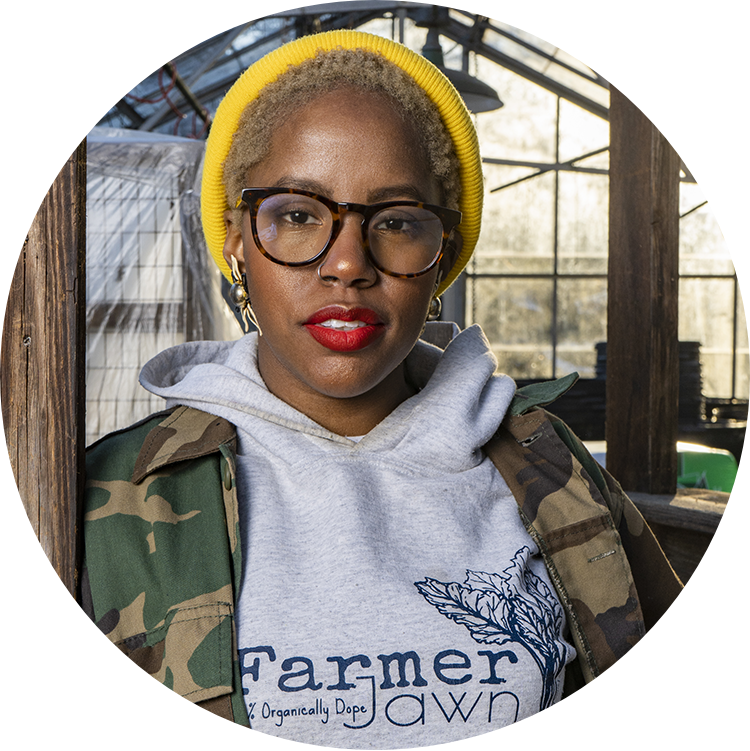
In this episode, we speak to Christa Barfield, founder of FarmerJawn, about urban agriculture, local sourcing, food deserts, and sustainability.

This conversation was recorded in March 2022, and my apologies to Christa and our listeners that it’s taken so long to edit and post this episode!

Christa Barfield is an entrepreneur and founder of FarmerJawn, a community-supported agriculture (CSA) business, which follows regenerative farming practices that concentrate on soil health and increasing access to organic food to marginalized communities. She’s a lifelong Philadelphian and a graduate a George Washington Carver High School of Engineering and Science and St. Joseph’s University. After a decade in health-care administration she founded Viva Leaf Tea, dedicated to providing high quality, healthful tea with traceable and local origins. These efforts that have grown into a CSA with two greenhouses in Elkins Park and plots in Roxborough and a storefront, FarmerJawn Greenery in Mount Airy.

Listen here or subscribe

Ep. 10: Ellen Hwang

So Where Do We Go From Here podcast

In this episode, we speak to Ellen Hwang, Philadelphia Director at the Knight Foundation, about how cities, media, the arts, and philanthropy have all evolved over the past few years in response to the pandemic.

Ellen Hwang is the Philadelphia Director at the Knight Foundation. Previously, she was with the City’s Office of Innovation and Technology, overseeing the creation of SmartCityPHL, a roadmap guiding the use of technology in serving the community and improving services. Ellen also directed programs at the Asian Arts Initiative, collaborating with artists, cultural organizations, and schools to develop and implement youth programs to engage them in arts and community development projects. She is a regular speaker on topics such as Smart Cities, community-driven technology planning and design, and engagement strategies for local government. She has presented at prominent events including SXSW, the Smart City New York Conference, and Tech Foundations for Congressional Staffers at the Georgetown University Law Center. Ellen grew up in Greater Philadelphia and has Bachelors and Masters degrees from Temple University.

Listen here or subscribe

Ep. 9: Rob Cottman

So Where Do We Go From Here podcast

In this episode, we speak to Rob Cottman, Executive Chef and Director of Food & Beverage at World Cafe Live, about how restaurants and food service have adapted to the challenges of the pandemic.

Chef Rob Cottman’s road to professional kitchens was driven by an entrepreneurial spirit when a unique opportunity presented itself to operate his own restaurant. After selling his first establishment, he decided to return to the basics and climb the ranks in established kitchens. Absorbing every ounce of knowledge around him, he accepted a position at World Cafe Live’s former location in his hometown of Wilmington, DE and spent years covering all aspects of the business from large scale a la carte service to formal catered dinners to specialty pairing menus. Now as the Executive Chef and Director of Food & Beverage at World Cafe Live in Philadelphia, Rob is responsible for the dining experience of over 100,000 guests a year, overseeing service in two spaces daily and over 200 catered events annually while playing an integral role in the next stages of the organization’s development.

Listen here or subscribe

No. 46 • 2021-12-30

Subscribe to Newsletter

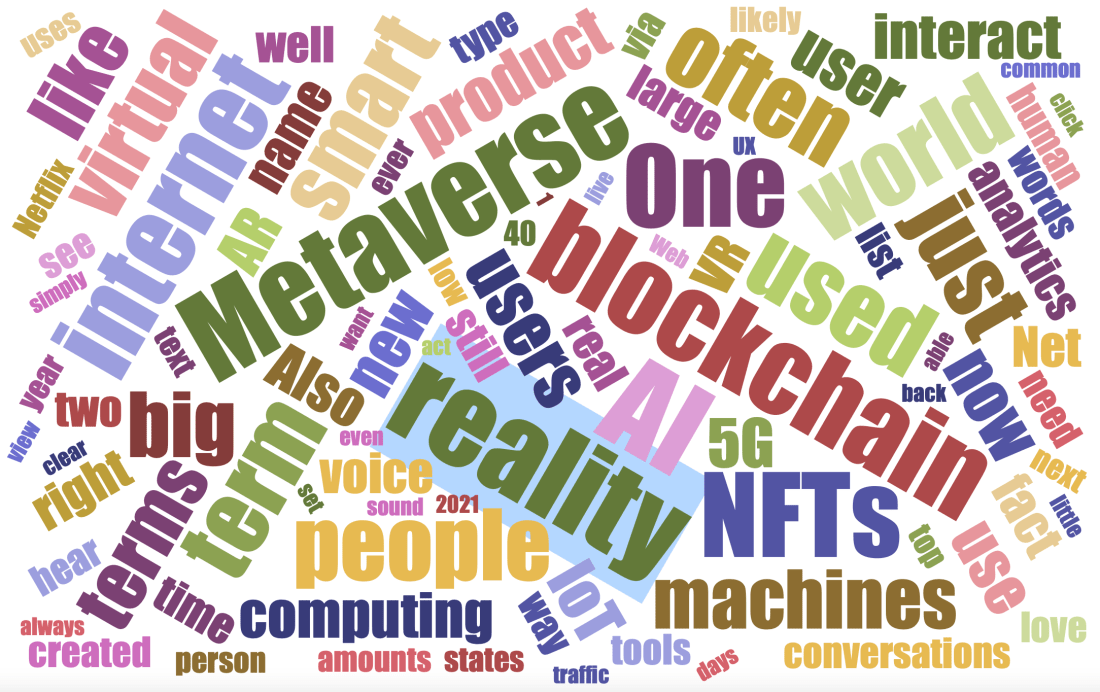
The Arts-Tech Buzzwords of 2021

It’s been another challenging year for humanity (and humanists). While some creative and social activities have returned to being in-person, others still remain distant. Technology has an even greater hold on our daily lives, so “new” advances received a lot of attention throughout the year. Here are my thoughts on some of the most hyped tech terms, particularly as they relate to artists and creatives.

NFTs. Just. The. Worst. I have not been shy about my disdain for NFTs (Non-Fungible Tokens). My fundamental complaint is that NFTs attempt to impose analog, real-world scarcity upon a digital domain where there is none. Digital bits are not scarce… they are just 1s and 0s and are by their nature infinitely copyable, a fact that has powered the digital media revolution. Claiming that some exact digital copies of a work are more privileged than others is just nonsensical. Unfortunately, NFTs are a hype bubble inflated by those self-interested in the success of NFTs.

I firmly believe artists should be paid, but NFTs aren’t the solution. It’s yet another attempt to turn uber-wealthy individuals into suckers. Only a few artists will find such benefactors. I’d advise digital artists to pursue other paths to monetization (crowdfunding and selling other forms of access and patronage for their work) over putting any effort into NFTs. Oh, and they are truly terrible for the environment.

Please note my rant is aimed at NFTs specifically and not all “Crypto” (blockchain-based) efforts. I believe there are legitimate and productive uses of the blockchain that are emerging. There may even be blockchain-derived applications that are useful to artists. But not NFTs. Hard pass.

AI. It’s already here, but not in the way most would have you believe. AI is not impacting us as “sentient machines” as depicted in sci-fi movies. It is far more subtle, but AI (really machine learning, which is lots of data and computation to recognize patterns) is powering the next wave of creativity. Behind the scenes, AI is the engine (“the algorithm”) that recommends and pushes content to you (Netflix shows, TikTok and YouTube videos, music, etc.). This is the kind of AI that will perform single specific tasks well, but it’s still quite limited.

AI, however, is also empowering creators with new tools that haven’t existed before. Photo and video editing apps let you easily adjust scenes to alter or remove elementsAudio tools automatically align music to go complement a video, adjusting length and matching key moments. These are time savers, to be sure, but I’m certain digital creators will find ways to use such capabilities to transform content in ways we haven’t foreseen. These features also lower the barrier to entry for making videos, music, etc., enabling more people to create. We’ll see more more and more AI-enabled art next year, it just won’t be obvious.

VR and the Metaverse. This is tricky, because these are really two different things (although Facebook, I mean Meta, would have you believe otherwise). If we’re talking about an alternate reality that is indistinguishable from our physical reality, we still have a long way to go. But if the Metaverse is an alternate space where people go to express themselves, interact, and transact, we’re already there. In gaming environments, such as Roblox, Minecraft, and other massive online worlds, gamers have created alternate representations of themselves and spend much of their time interacting through their “avatars”. Arguably, even some messaging and social media platforms are primitive “Metaverses”.

But if we’re talking about goggles you put on your face to transport you to another reality, I don’t believe this will become mainstream for some time, if ever. Hard-core gamers may disagree (and there are some truly compelling and immersive games created for VR headsets). For most people, neither the technology (it’s still heavy and uncomfortable) nor the motivation (content) are there yet. And for most artists and performers, I don’t see a compelling use… yet. One may eventually emerge, but I’d hold for a few years, at least.

My apologies to subscribers. Due to other deadlines and a frenetic end of year, I’ve missed several publishing cycles (and once you miss one, it’s too easy to miss another one). The world also changed quite a bit this Fall… We have mostly returned to live performances, which is wonderful, but it means that many have shifted away from a focus on virtual/digital content. As a result, there’s been less for me to comment on the theme of “creating at a distance”. Of course, the recent pandemic surge has made things a bit more perilous at the end of the year, so we’ll see how things go in new year.

I’m not going to stop, but my upcoming schedule probably won’t allow for me to publish bi-weekly, as I have for most of 2021. I still intend to post when I can and when I have something of interest to share, but my publishing schedule will likely be irregular in 2022. Best wishes to all of you for a very Happy New Year!

(Socially) Distant Creations

  • Ave Maria [Kings Return] Another fantastic stairwell performance by this talented a cappella quartet. I’ve shared some of their earlier videos, and I’m happy to see they’ve recently blown up a bit. A great example of how some artists have used video to grow their audiences during the pandemic.
  • All I Want For Christmas… [John C. Worsley] A unique take on the ubiquitous Christmas anthem, with a high degree of 90s nostalgia for us fans of Star Trek: The Next Generation. Be sure to also check out his latest, You’re a Mean One, Mr. Spock.
  • Deck the Hall [The King’s Singers] From this holiday season’s Live From London streaming festival, this time performed before an actual live audience! This is an example of how some performances only work with an audience. Started during the pandemic, Live From London continues to be the premiere outlet for new vocal ensemble performances.
  • Deck the Hall [Chanticleer] I couldn’t resist putting these two videos back-to-back. Another beautiful performance of the holiday classic, but it’s striking to see the two different takes: one performed for a live audience and this one, a video-only production.
  • There’s Something About That Name [Jordan Baize, via NY Times] The morning after a tornado destroyed his house, a Kentucky homeowner took to his piano, still intact under an open sky. An incredibly haunting video that still manages to convey a sense of hope.

What I’m creating…

While it still hasn’t snowed in Philadelphia this season, there’s plenty of it in the Drexel Build, our virtual campus in Minecraft. Special thanks to my students in the Music & Entertainment Technology Lab for the soundtrack.

Happy New Year!

Ep. 8: Donald Nally

So Where Do We Go From Here podcast

In this episode, we speak to Donald Nally, music director of The Crossing, Philadelphia’s Grammy-award winning chamber choir, about creating choral performances through the pandemic and the process of “musical journalism”, to capture and reflect our times.

Donald Nally collaborates with creative artists, leading orchestras, and art museums to make new works for choir that address social and environmental issues. He has commissioned over 125 works and, with his ensemble The Crossing, has produced over 25 recordings, with two Grammy Awards and six nominations. His 60-chapter series Rising w/ The Crossing, a response to the COVID-19 pandemic, gained national attention and was featured in The Los Angeles Times, the New York Times, The Washington Post, and NPR’s Performance Today; it has been archived by The Library of Congress as a cultural artifact as an “important part of this collection and the historical record.” Donald has served as chorus master at the Lyric Opera of Chicago, Welsh National Opera, Opera Philadelphia, and the Spoleto Festival in Italy. Recent projects have taken him to London, Osaka, Cleveland, Boston, Edmonton, Houston, Helsinki, Haarlem, Riga, Los Angeles, New York, and Chicago. Donald is professor of conducting at Northwestern University.

There are some minor glitches and dropouts in this episode. Our apologies to Donald and our audience for the audio issues, but it’s still well worth a listen!

Listen here or subscribe

Ep. 7: Sarah Williams

So Where Do We Go From Here podcast

In this episode, we speak to Sarah Williams of Opera Philadelphia about creating and commissioning new work amidst the pandemic and developing what is essentially a new genre of short operatic films.

Sarah Williams is the Director of New Works & Creative Producer at Opera Philadelphia.  Since 2014, she has cultivated 15 award-winning world premieres, numerous co-commissions and creative works, making the company an industry leader in producing new work for the physical and digital space. In continuing to expand artistic practice and celebrate the intersection of the arts, Sarah champions digital experiences including creating the digital commission series in which the New York Times said, “One of the great treasures of the pandemic has been Opera Philadelphia’s digital shorts.” She’s been widely recognized as a multidisciplinary leader and producer who in 2020 was named one of Philadelphia Business Journal’s Women of Distinction. In 2019 Sarah was named among the top 30 Professionals of the Year by Musical America. Sarah serves on the board of American Composers Forum and the executive board of Young Women Composers Camp, is a member of New Opera Dialogues, and a mentor for Utopia Arts.

Listen here or subscribe

Ep. 6: Lisa Nelson-Haynes

So Where Do We Go From Here podcast

In this episode, we speak to Lisa Nelson-Haynes about adapting Philadelphia Young Playwright’s creative education program to online learning and the ways young people have found to express themselves in response to the pandemic.

Lisa Nelson-Haynes is the Executive Director of Philadelphia Young Playwrights (PYP), where she helps young people discover their potential through the art of the play. PYP is currently in 43 schools, throughout Philadelphia, Delaware and Montgomery counties, and in 92 classrooms with students in grades 2 – 12. Lisa is an award-winning storyteller and teacher and has facilitated digital storytelling workshops for Storycenter for more than ten years. She is the executive producer of Mouthful, a Philly-based podcast that digs into the experiences and perspectives of young people to start conversations about big ideas and important issues.

Listen here or subscribe